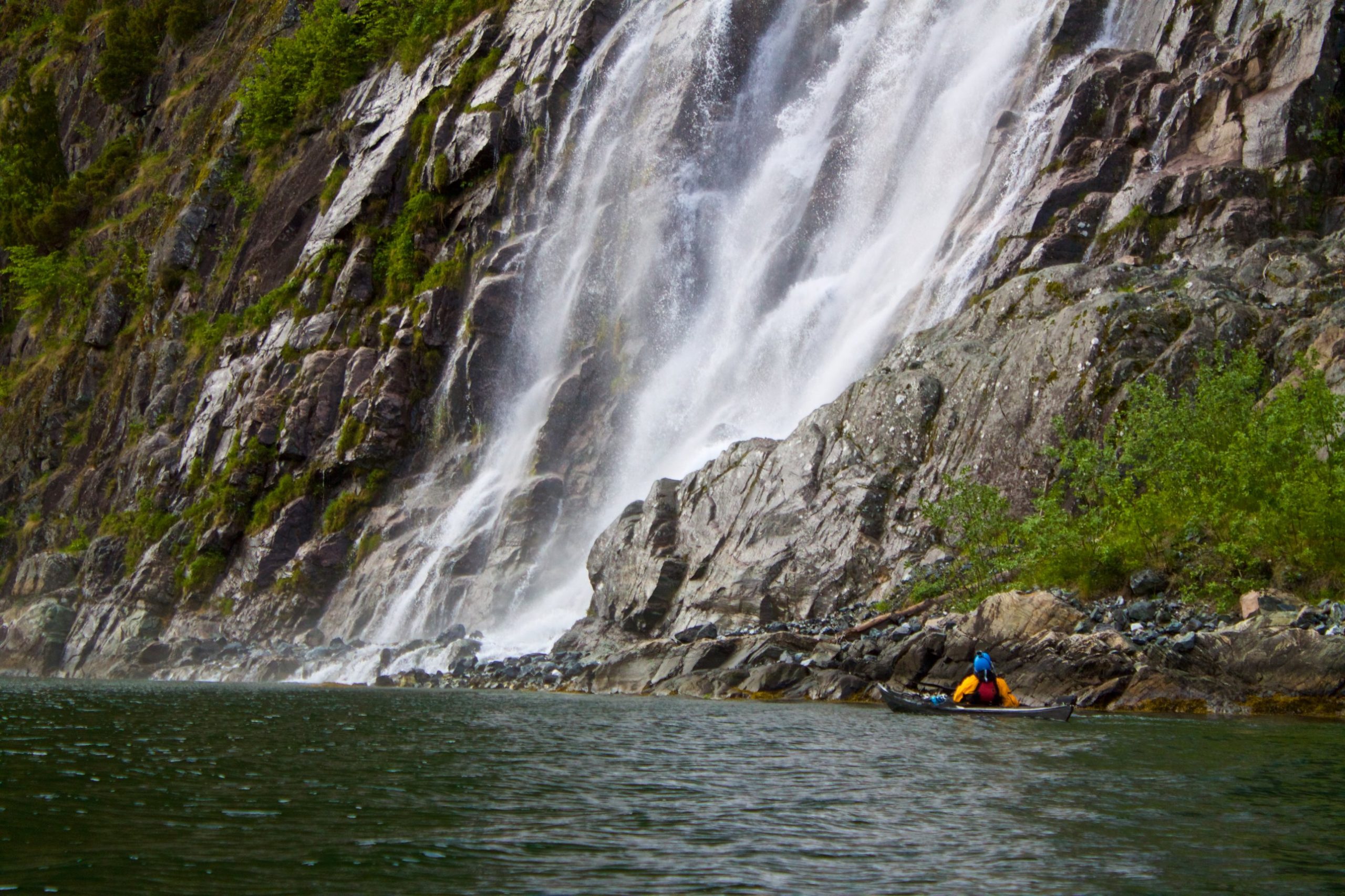
On the Norwegian coast you are never far from fresh water. Streams run off the mountains into almost every bay, and most of our campsites have clean, running water within a few steps of the tents. This page explains where we get our water, how the chlorine tablets we hand out work, and how to stay safe with water in the wild.
Where we get our water
Our guides know the coast and know where the clean water is. Most of our campsites have good running water from streams, and we plan the days so that we land where water is easy to collect.
Our guides plan the drinking water for every trip before we set off: where we can fill up, and how much the group needs to carry between sources. At the start of the trip you may be asked to carry about 6 litres of water. The guides will tell you where and when you can fill up along the way.
On the water you carry what you need for the day. Bring a drinking bottle you can reach from the cockpit, plus water bags for camp. Water is heavy, so keep the water bags in the cockpit, behind the seat or in front of the footrests. See where everything goes in our packing list.
Stream water in Norway: the facts
- Water from remote Norwegian streams is usually very clean. There are no farms, roads or houses upstream, and the water runs fast over rock.
- In remote areas, the main sources of contamination are droppings from birds, wild animals and sheep grazing in the hills.
- The risk changes with the season and the weather. It rises during snowmelt and after heavy rain, when water washes over the ground and into the streams.
- In years with many lemmings and other small rodents, dead animals in or near water can spread tularemia (harepest).
- Most illness from drinking water is a stomach upset: diarrhoea, cramps and sometimes vomiting. Even mild illness is hard work on an expedition, so we take water seriously.
How the chlorine tablets work
We give every participant chlorine tablets for treating drinking water. When a tablet dissolves, it releases chlorine, which attacks and kills bacteria and viruses in the water. Some tablets also contain silver, which stops new germs from growing in the bottle afterwards.
How to use them
- Fill your bottle or water bag with clear, running water.
- Add one tablet per litre, or the dose printed on the pack.
- Let the tablet dissolve, then shake well. Splash a little of the treated water over the thread and cap so they are treated too.
- Wait before you drink. In mild water, 30 minutes is enough for bacteria and viruses. Norwegian streams are cold, usually below 10 °C, and chlorine works more slowly in cold water. So wait 2 hours, which also gives the chlorine time to deal with Giardia.
The easy way to handle the waiting time is to always have one bottle ready and one treating. Treat your water bags in the evening for the next day, and refill your bottle at lunch for the afternoon. Treated water has a slight taste of chlorine. It is harmless and fades if you leave the cap off for a while.
Chlorine only works well in clear water. Mud and particles shield germs from the chlorine, so never treat cloudy water. Find a better source instead.
Why we do not boil or filter our water
Boiling and filtering are good methods, and in many parts of the world you need them. On our trips they are not necessary:
- The source matters most. Streams on remote parts of the Norwegian coast are very clean. There is no farming, sewage or traffic upstream, and our guides choose the sources.
- Chlorine does the job. In clear, running water from a clean catchment, chlorine tablets used with the right waiting time deal with the germs you are most likely to meet.
- Simple works on an expedition. Boiling every litre costs a lot of gas and time at the end of a long day. Filters can clog, freeze or break. A few grams of tablets per person cannot fail in the same way.
Water safety in the wild
These are good habits on any trip, with us or on your own.
- Choose running, clear water with no smell or odd taste. Avoid still pools and puddles.
- Look upstream. Avoid water with animal droppings or dead animals nearby, such as dead lemmings. Avoid water where sheep or other animals are grazing close by, and water that runs off farmland.
- Collect water above camp. Fill bottles upstream of where people wash, cook or go to the toilet.
- Keep the toilet well away from water. Go well away from streams, lakes and the shore, and bury or pack out waste.
- Wash your hands. Use hand sanitiser after the toilet and before you cook or eat. Many stomach upsets on trips come from hands, not water.
- Take extra care after rain and snowmelt, when more of the land drains into the streams.
- Drink enough. Paddling all day in sun and wind dries you out faster than you notice. Drink at every break, even in cool weather.
- Tell your guide if you get a stomach upset, so we can help you stay hydrated and keep it from spreading in the group.
Small children, older people and anyone with a weakened immune system are more at risk of serious illness from water. If that applies to you, talk to us before the trip.
What to bring
- A drinking bottle you can reach from the cockpit
- Water bags that hold about 6 litres in total
- A thermos for something hot at breaks
- Hand sanitiser
We hand out the chlorine tablets at the start of the trip. See the full packing list for everything else.